Friday, March 29, 2019

Nightlancer

Game: Nightlancer
Manufacturer: Adversity Games
Year: 2016


Special Note:
Nightlancer is a game that is currently in a pre-production phase as of the writing of this review. I was fortunate enough to be given a copy for review purposes as the game was being prepared for its Kickstarter campaign. It's important to note that all of the photos below are of this prototype copy, and most of the artwork and design elements are missing. There are also some changes which have been or are being made to a few gameplay elements for the final version.

Because this review is for a version of a game printed before most of its artwork has been finalized and some of its rules are still being tinkered with, I don't necessarily feel its appropriate to give it a numerical grade at the end as I usually do. I've done some reviews of pre-production games on here before  where the art was not completed, but this is the first which is also undergoing some mechanical work as well. So, while I'll still explain it and tell you what I think about it, I'll hold off giving it a grade until such time as I've played a finished version.


Personal History:
When I was in college I was introduced to the world of "Shadowrun" through an emulated copy of the Sega Genesis game on my roommate's computer, and ever since then I've had this weird general interest in the Cyberpunk genre without ever "really" spending a lot of time with it.

So anyway, fast forward to about a month ago or so when I discovered that the creator of "Nightlancer", a game which seems to exist within that genre, was looking for reviewers in advance of its upcoming Kickstarter campaign. I was happy to give it a shot.

Condition:
As mentioned above the copy I received is certainly a prototype, and it appears to have been a well played one at that. Still, the components seem to held up well to whatever use it's had so far. All components were of course included.

 
Gameplay:
Each player chooses a starting character and retrieves all of that character's starting items, including Health, Resolve and Money Tokens and the player's starting equipment and Agenda cards, player token, and one contract token. Each player also chooses a color, placing tokens of that color on the starting spaces for "Heat" and "Prospects" and in a position on the "Order" track. Each player also takes their color's plastic clip and places it on his character card to indicate their starting "Ideals" level as indicated.


The basic game takes place over the course of eight rounds or ten rounds for a two player game. All of the characters in the game are living a fairly awful life and are looking to find a way out. The ultimate goal of the game is to be the player at the end with the greatest "Prospects" value, or in other words be the player with the best chance of getting out of his or her current predicament. To do this the players must work within the system they are trying to escape and basically commit some crimes to increase their resources and thereby improve their prospects. Doing this can increase a player's "Heat", a measurement of how much the police are onto them, and can decrease his or her "Ideals" which seems to be a measurement of how much a player has compromised his or her own sense of morality.


Each round follows a series of four phases with different actions to be taken in each. All actions in all phases are resolved according to the player turn order that day. The first Phase is the "Prep" phase in which the general circumstances of the day are presented. First an "Event" card is drawn from the event deck which helps to select which jobs or "Missions" will be available, what the day's price for Prospects will be, and then usually gives a stat check of sorts that players have to deal with or suffer a penalty. The "Black Market" is refreshed with a number of new cards determined by the number of players and each player also receives two "Contact Cards", one health, one resolve and one KC (the game's currency).


While most of what happens during the Prep Phase is just housekeeping this is also the time when players may elect to go on missions. Missions are the most direct way to gain money, and money is the most direct way to acquire nearly everything else. Missions cards detail the mission objectives, show what skills will be required to complete each step in the mission, and display the rewards for successful completion. Missions can be attempted solo or as part of a crew. Starting with player one on the order track each player may select one mission to attempt this round, placing his character token on the green "Stage 1" space. He may also play a "Contract" token if he has one on the red Stage 1 space preventing any other player from attempting that mission. If he doesn't play a contract then a subsequent player may choose to also attempt the same mission, placing his marker on the red Stage 1 space. If two players would like to attempt a mission together they may stack their tokens. Attempting a mission as a crew improves the chances of success.


After the Prep Phase is the "Streets Phase" during which the players may take one of four possible actions. The first and usually the most immediately helpful is to purchase something from the Black Market. In order to successfully complete a mission the player is going to have to pass three different stat checks, and one of the most straightforward ways to increase stats is to purchase some type of equipment. Armor, Gear, and Weapon cards are all items that you may choose to take into a mission. Cyberware and Cyberweapons become grafted onto a player and are taken by default into every mission. Cyberware and Cyberweapons also cause a loss of health along with the monetary cost (presumably because they're surgically implanted).


The second possible action is to complete an Agenda card. Agenda cards are tasks that the player wants to accomplish, and are usually completed by gathering or expending a certain amount of something, be it money or cyberware or stat points. Completing an agenda is rewarded with either Ideal points or Prospect points.

The third possible action is to take out a loan. When doing so the player receives a loan token and ten KC. Players may have out a maximum of two loans at any given time, and may pay them off in full at the beginning of the next prep turn or else pay one KC for each loan token they have. Holding unpaid loan tokens at the end of the game results in a significant penalty. If the player chooses not to take out a loan he may purchase Prospects at the going rate noted on that day's Event card. He may also pass and do none of those four things. Players continue to take an action in turn order until all players have passed.

The third phase is the Missions Phase. During this phase all of the missions that players have chosen are resolve, again in turn order. Each mission is composed of three stages, and at each stage the player must choose one of two stat checks. The stats in the game are "Covert", "Street", "Technical", "Close", "Gunfighter", and "Marksman". Players begin with a base number in each and can add to those through the use of purchased items and by playing contact cards. Each mission has different requirements as well as mission specific limitations. For instance some missions need to be done quietly, so items which are considered loud cannot be used. Some missions require explosives or a distraction, in which case the proper Gear or Contact will need to be brought along.

The first step in the Missions Phase is for each player to choose what gear he plans on taking, and place that chosen gear in his three "Loadout" spaces above his character card. Each piece of gear can only be used once during the course of the mission. As previously mentioned Cyberware and Cyberweapons are automatically brought along and do not count against a player's loadout. Contact cards are always available to a player and also do not count against a player's loadout.

At each stage of the mission the player is given two options as to how to get past a specific obstacle. The symbol at each option indicates the character stat that will be used along with the number that a player must meet or exceed using that stat. The player's total value for each stat check is their base stat plus any modifiers from used gear or cybernetic upgrades, plus effects from contacts, plus the roll of the game die. The die has faces reading 0, 1, 2, 3. Once those numbers are added together they are compared to the number on the mission card. Meeting or exceeding that number means success and the player moves his token to the next stage of the mission, completing that check the same way until all three stages are passed.


If a player fails at any stage of the mission he must suffer a penalty, indicated by a red box in the middle of the mission card. Penalties range from an immediate loss of the mission to increased heat or a physical attack. If a player's health or resolve ever run out they are immediately tossed from the mission. To that end a player may also choose to abort a mission at the beginning of any stage. 

If the player took on and completed the mission unopposed he collects a prize indicated by the chart on the mission card. If two players complete the first two stages of a mission they must confront each other in combat to determine which player can attempt the third and final stage. The initial player on the mission chooses one of the three combat types, Close, Gunfighter or Marksman, and after all bonuses are counted the player with the higher total for the chosen stat is allowed to continue on. Close, Gunfighter and Marksman stat checks also cost health to participate in, so it's possible a player without enough health remaining can be eliminated from a mission simply by being challenged.

Once the Missions are over and the players have collected whatever rewards they are due the "End Phase" of the round begins. If there are no more Event cards to be flipped then the game is over. Otherwise players discard their hand of Contacts cards down to three, determine turn order, and begin the next round. If the Game has ended players may fulfill any lingering Agenda cards, sell item cards, purchase prospect points, pay off outstanding loans and make payments to reduce heat. Players with loans or heat remaining that they cannot pay off receive a deduction of prospect points. The player with the best Prospects at the end of the game is the winner, with ties going to the tied player with the most ideals, and additionally the most KC if necessary. There are a few other little rules and game bits here and there that I've glossed over, but this is the general run of it.

So How Is It?:
First, while the copy I have includes almost no art, the little bits I am able to see are promising. The cover features scenes with two characters doing their thing and the artwork definitely has the dark, dirty future feel to it that fits with the genre. The art also reminds me of the sort of style used in a lot of late 80's comics made outside of the Marvel/DC books. It's less realism and more stylized grittiness with bright pops of color. If more art like that which is shown now is used to fill out the game I'm sure I'll be pretty pleased with the final product. It should also be noted that some examples of the new card layouts are shown on the Kickstarter campaign page and they are so much nicer than the prototype cards.


As for the game itself I will say that I liked it, but not everyone in my play group did. This game has a lot of little fiddly things to pay attention to, and while all of them make perfect sense in terms of creating a narrative and really do help to build a sort of immersive experience, they can also sometimes get in the way of what should be at times a simple transaction. For example, it's difficult enough to find a mission that you can complete without much trouble for much of the game since they often require the player to have equipment and stat boosts in multiple categories. Add to that the randomness of a die roll to help you out, the ability of opponents to hinder you with Contact card effects, and an often unforgiving series of penalties for missing the mark on each stage. At this point doing well is tricky, but the game's not meant to just hand you a win so I understand. It's beyond this point that things border on aggravating.

Some missions require specific item cards or contact cards to complete. It's not enough, for example, to have built a character whose Covert skill is so high that he doesn't even notice himself when he enters a room. No, sometimes a specific mission requires a contact card who can act as a distraction while you simultaneously pass a Covert stat check. It's just creating another barrier to the use of a skill that you've probably spent a lot of time trying to build up to the detriment of other skills. Logically it might make sense that you'd need to take a bomb with you if you plan on detonating a bomb as part of your mission, but I don't think game benefits much from including the detail of "how my super technical character hacked a computer" or "exactly how my master of covert techniques distracted the guard", and at the end of the day it's hard enough to complete many of the missions anyway.

We all also took issue with the way direct combat is handled in the game. It's of course likely true that if I choose to get involved in some close-quarters combat with someone I'll probably come out of that situation with some amount of injury. The way the game approaches combat, however, is to immediately assign damage to the participants before any kind of stat check occurs. This means that you might create a character who is a beast of a close combat fighter with really great stats and bonuses to that effect, and enter him into a Mission where he has to fight, say, a reasonably healthy baby. Unfortunately the mere thought of having to fight the baby costs your character three health, and because he wasn't fully rested you character suffers a devastating loss and has to abort the mission, all without even getting to the stat check for which you had so prepared. Of course there's no evil babies in this game (Yet. Who knows what expansions are planned), so I'm being a little absurd but the point remains, and I honestly think that the characters who skew in their opening stats towards combat are not great choices unless you can convince other characters to always partner with you, or you always compete with other players on missions and can get through the first two stages without taking so much damage that the deciding combat with the other player kills you before you can capitalize on your stats. That was a long sentence but go ahead and diagram it if you want.

The other thing we didn't really like was the difficulty of completing the Agenda cards. these seem like the fast track to Prospects at first but we found them very hard to complete until right at the end, and since you can just throw money at the problem by purchasing Prospects there really seemed to be little point. A vast majority of our Prospect points, truth be told, were gained after the game was over and we sold our equipment cards to pay for them. The equipment you buy from the black market is so necessary to ensure success in the missions, and completing missions is really the only way to acquire money. You often find yourself trapped in a loop of spending all of your mission money to purchase cards from the market which are used in turn to attempt more lucrative missions which require more expensive equipment. The necessity of occasionally healing a character will mean a turn lost without taking a mission at all, meaning no additional funds that turn, and a lost mission often means no funds this turn or next turn since several mission failures are the result of combat challenges which as stated above greatly reduce your health. And all of that is fine and part of the game's world and strategy, however the Agenda cards also being so difficult to achieve mean that purchasing Prospects is often the only way to get prospects, and that means not buying the equipment you will need to make the money to buy the prospects.


Prior to writing this review I asked the game's developer what changes could be expected moving from this prototype to the final game and one of the main things he mentioned was doing something to make Agenda cards more reasonable to complete. I applaud that notion and hopefully this change will make acquiring both Prospects and Ideals (which can only be increased by completing some Agenda cards) much easier.

So that's five long paragraphs describing what I didn't like about a game I said I enjoyed, and I don't want all of that to overpower the positives.  This game is like a Hitchcock movie. Every little thing has been thought about and meticulously placed and rationalized, and because every element exists to form a cohesive whole you get something which plays like a living choose your own adventure novel. Every character has a fairly thorough back story written on the back of its card. All of the stories are depressing and reveal the background and motivation of the character. As you assume the character's mantle you are guided through their attempt to escape from their awful life. There is flavor text on everything in this game, from full descriptions of every mission and rationales for each stage of every mission, to the agendas the players take on, to the events the players must contend with each round, the equipment they buy, the contacts they make, etc. The rule book contains descriptions of the world in which this game is set, referencing things that are sometimes never mentioned on any other part of the game. It all works to build a game atmosphere you can almost smell.

This attention to detail is the game's greatest asset, while at the same time creating some of the issues I had with it. I love how immersive it is, and I appreciate that the difficulty of gaining ground mirrors the reality in which each character lives. There was never a turn where I felt as though I was wasting an action or doing something that didn't need to be done. Absolutely every choice a player makes has real consequences, and a few poor decisions can lead to a very poor end for his character. At the same time success in a mission actually feels like real success, and since money is so precious all purchases must be heavily weighed. This is a long game to play because so many factors have to be considered and almost nothing can be decided lightly. Players looking for a game with very black and white decisions are going to probably hate Nightlancer, as are players who completely ignore the narrative qualities of it.


I'd also like to add that I love the idea of the "Ideals" scoring track. Having your character grapple with his or her morality throughout the course of the game is very interesting concept, and one that I've not really seen before in a board game. Since each character is basically starting the game in awful circumstances and just struggling to get by, it's interesting character-wise to consider that obtaining financial freedom might come at the cost of compromising your own morality and losing your sense of self. In game terms a character who has lost all of their ideals becomes "Technoshocked" and cannot win the game unless all other players are also technoshocked. Basically if you've engaging in morally damaging missions so often that you've become a self-loathing cretin who no longer has any regard for what's right and wrong, then the only way to win becomes to try and force the other players into sinking down to your level. It's sort of diabolical, and while none of us ever went that far down the Ideals track during our play the lack of easy ways to restore your ideals makes it a real threat.

At the end of our four-hour-long, four-player session I know two of us would definitely give it another play even in this state with the issues discussed above, and oddly enough we were the two who did the worst. One of my playgroup definitely disliked it, and I feel that was in part because she didn't really like the theme and ignored that aspect of it, making it then just seem like a slow and complex game of arbitrary numbers. The fourth player, the winner of our session (It wasn't even really close), also seemed to enjoy himself. I will say though, especially since he's one of my most faithful readers, that upon review of the rulebook I think we let him get away with a few things regarding his equipment that wasn't technically allowed. So while at the time and with our flawed understanding of a couple of rules you may have won, in the grand scheme of things you're a big cheater. So there.

Final Verdict:
This is a long, heavy, theme-y game. It's really not for everybody and it does have some issues which can suck some of the fun out of it. At the end of the day though I definitely enjoyed fighting for my character and I thought a majority of the elements in it were extremely well executed. The longer I've thought about it the more of a fan I've actually become. I look forward to seeing the finished product and would love to try it out once the last bits of adjusting have been completed.

The campaign to fund Nightlancer on Kickstarter is currently active as of this writing, so go check it out!

Android Security Improvement Update: Helping Developers Harden Their Apps, One Thwarted Vulnerability At A Time

Posted by Patrick Mutchler and Meghan Kelly, Android Security & Privacy Team

Helping Android app developers build secure apps, free of known vulnerabilities, means helping the overall ecosystem thrive. This is why we launched the Application Security Improvement Program five years ago, and why we're still so invested in its success today.

What the Android Security Improvement Program does

When an app is submitted to the Google Play store, we scan it to determine if a variety of vulnerabilities are present. If we find something concerning, we flag it to the developer and then help them to remedy the situation.

Think of it like a routine physical. If there are no problems, the app runs through our normal tests and continues on the process to being published in the Play Store. If there is a problem, however, we provide a diagnosis and next steps to get back to healthy form.

Over its lifetime, the program has helped more than 300,000 developers to fix more than 1,000,000 apps on Google Play. In 2018 alone, the program helped over 30,000 developers fix over 75,000 apps. The downstream effect means that those 75,000 vulnerable apps are not distributed to users with the same security issues present, which we consider a win.

What vulnerabilities are covered

The App Security Improvement program covers a broad range of security issues in Android apps. These can be as specific as security issues in certain versions of popular libraries (ex: CVE-2015-5256) and as broad as unsafe TLS/SSL certificate validation.

We are continuously improving this program's capabilities by improving the existing checks and launching checks for more classes of security vulnerability. In 2018, we deployed warnings for six additional security vulnerability classes including:

  1. SQL Injection
  2. File-based Cross-Site Scripting
  3. Cross-App Scripting
  4. Leaked Third-Party Credentials
  5. Scheme Hijacking
  6. JavaScript Interface Injection

Ensuring that we're continuing to evolve the program as new exploits emerge is a top priority for us. We are continuing to work on this throughout 2019.

Keeping Android users safe is important to Google. We know that app security is often tricky and that developers can make mistakes. We hope to see this program grow in the years to come, helping developers worldwide build apps users can truly trust.

Wednesday, March 27, 2019

5 Reason You Shouldn't Start A Game Store

Here are five reasons you shouldn't start a game store, right now, in California specifically. Some of these apply to other regions, but it's specifically my market. Later I'll write about five reasons you should start a game store in California right now. There are few times when it's clear you absolutely shouldn't start a business, and they tend to involve national catastrophes. Most of the time, there's a little of column A and a little of column B. But for today, here are five reasons you shouldn't start a store in California right now:

1.  Wages. While other regions of the country work with the very low national minimum wage of $7.25 an hour, California's minimum wage is at $10.50 an hour and rising dramatically with no end point in sight. In three years it will be double the national minimum and it will continue to rise by law. This is because we've got a mismatch of education and jobs and we're trying to turn every job into a living wage position. I don't know how traditional retail stores will survive this without double digit growth and robots. Retail stores that use an MSRP system cannot raise prices to make up for higher wages and the only hope is a "rising tide" scenario where all these workers (about 50% of the workforce and climbing) have more money to spend with us. But you know where they'll spend it? Let's look at number two.
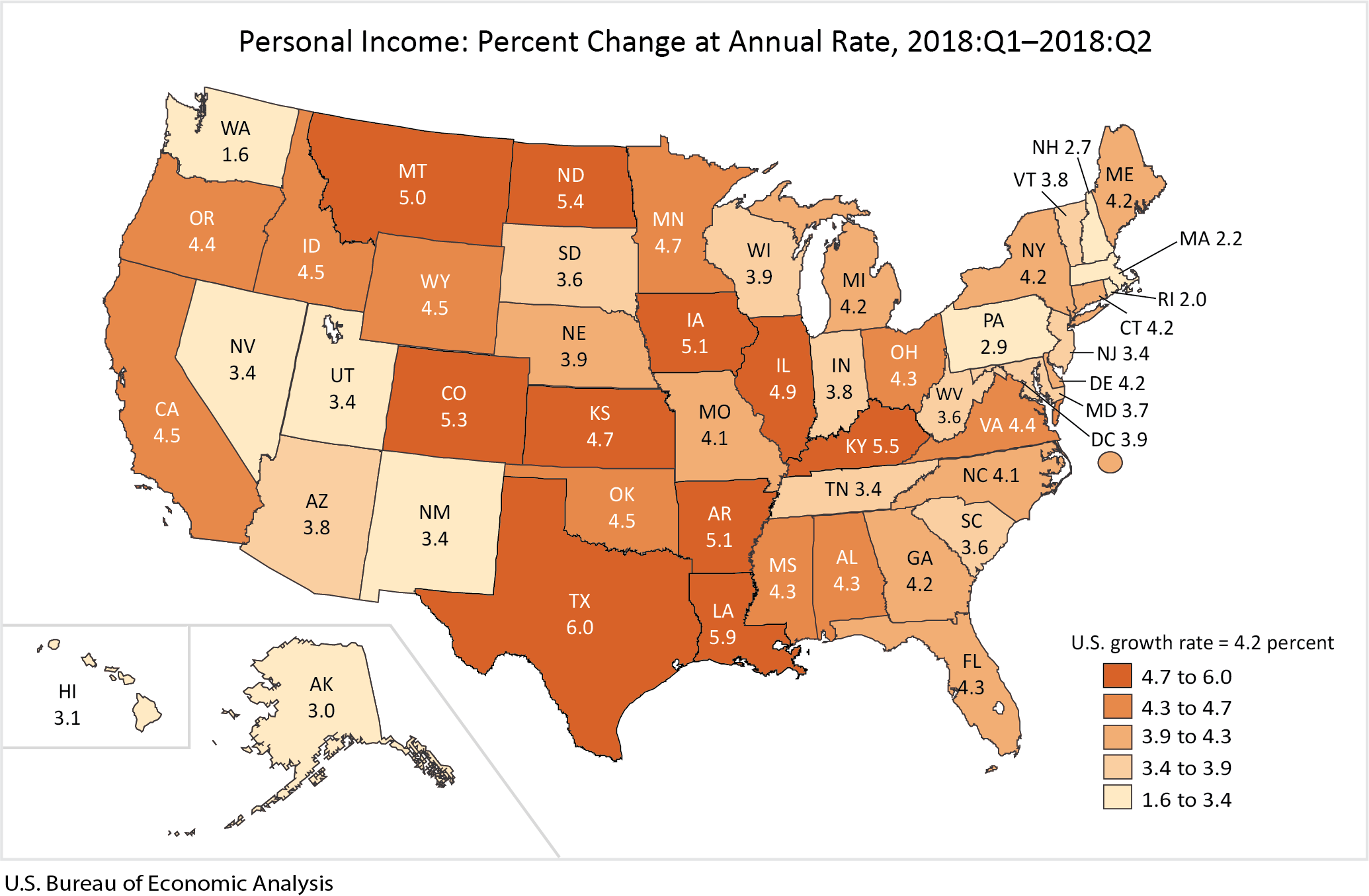
2. Rising Inflation. The Western region consumer price index rose at 3.4% last year, over 50% faster than the rest of the country. This means not only are your expenses rising, but the expenses of your customers are on the rise. The game trade addresses inflation by shrinking your margin, which we'll get to, rather than raising prices. With all that wage growth in California, you may wonder about the net result. California income rose 4.5% this year, which only leaves a small 1.1% net if you look at that 3.4% inflation. Wages are rising, inflation is rising, nobody is getting richer, but your store is become more expensive to run.

3. Retail Apocalypse. The report of the retail apocalypse is mostly overblown, however, there is some truth to this as the United States has roughly ten times more retail square footage than other developed countries, with large retailers falling off cliffs regularly at this point. There are simply too many stores, that are too large, selling the same things and scraping by.  The likelihood of a recession nuking as many as half of retailers -- permanently -- is rather high, leaving survivors like us in strip mall ghost towns. There are only so many nail salons and massage parlors to fill in the holes. At least half of retail, right now, are dead stores walking. A recession is coming (it's always coming) and there will be a retail reckoning. Although game stores are counter-cyclical, meaning we'll survive fine, the retail infrastructure is likely not to be the same afterward.

4. Shrinking Margins. The big publishers like Wizards of the Coast and Asmodee reduced retailer margins by several percentage points each. This means you have to sell more product to make the same amount of money. My store needs to sell $7,500 more each month, just to offset Wizards of the Coast's margin shrink. That's an extra 150 D&D Player's Handbooks, or 1,500 copies if you're Amazon, who sells these books at our cost. That's pure fantasy. We're moving towards mass market margins, which means you'll need rapid growth and high sales velocity to stay in business in the future.

This makes it increasingly difficult to start a store with Magic as the cornerstone, and that's probably half or more of new stores. When Magic is no longer the cornerstone, it also means stores will be smaller, with less game space and less marketing power for the rest of the game trade. Those who don't believe game stores are a positive marketing force for their game, may be in for a surprise when they change formats.

5. Massive Instability. Traditional retailers, who rely upon a catalog of games, built over decades, are struggling to survive due to the constant pressure of one-off crowdfunded games. There are ten new board games released each day. While traditional retailers build a business with traditional relationships with publishers, crowdfunded game designers are interested primarily in getting a game directly to the consumer, rather than building a catalog and a brick and mortar company. This instability leads to disintermediation by desperate game publishers, which often harm brick and mortar retailers. Crowdfunding is something we've embraced as retailers, but for the most part it's a disintermediating force. Publishers of all stripes desire to get as many direct sales to consumers as possible. You are the middle man. The middle is friction and cost. Nobody wants to feed the middle, if they don't have to.

Conclusion:
Doom and gloom is easy. Retail is about two steps forward and one step back. Anyone can talk about that step back. In the next post I'll talk about the two steps forward, why you should start a game store. In reality, it's a poor business model in a ramshackle industry and you should do anything else if you can. However, if this is really what you want to do, there are good reasons to get in now. Or at least that's the sunshine I'll be selling with my next post.

Assassins Creed 3 Blackbox


Minimum System Requirements 

Processor: Intel Core 2 Duo E6700 2.66GHz / AMD Athlon 64 X2 Dual Core 6000+Graphics: AMD Radeon HD 3870 or NVIDIA GeForce 8600 GT 512MB GDDR3RAM: 2 GB RAM


Recommended System Requirements

Processor: Intel Core 2 Quad Q6400 2.13GHz / AMD Phenom 9550 Quad-CoreGraphics: AMD Radeon HD 5770 512MB or NVIDIA GeForce GTX 260RAM: 4 GB RAM

Download The Game Here

Welcome To Flights Of Fantasy Books & Games!


Flights of Fantasy is Now a
Pokemon Go Destination!


MTG RAvnica NEWS!
Ravnica Allegiance is a 264 card set. Darkness is coming to Ravnica. A conflict that could tear apart the world itself looms large, and the fragile peace between the guilds is strained to its breaking point. Now, with everything on the line, it`s time to step up, prove your loyalty, and fight for your guild.

BUY-A-BOX


For MTG trade/buy/store credit please contact Maria or Dave thru the store or availability (excluding Saturday mornings) 
If you want cash, you must accept Paypal! 

MTG PLAYERS! 
We have millions of MTG cards in stock from Alpha thru current set and will be online soon with a TCG E-store at www.tcgplayer.com

Come on by and check them out!

CHECK OUT OUR EXCITING NEW FEATURE!
Games with James!


Flights of Fantasy's Store Clerk James gives you the low-down on great games available right in the store!

Flights of Fantasy now has signed copies of the following authors' books:

Elizabeth Bear
Anne Bishop
Ben Bova
Peter Brett
David Brin
Kristen Britain
Terry Brooks
Lois McMaster Bujold
SC Butler
Patricia Bray
Chelsea Cain
Barbara Campbell
James Cambias
Cinda Williams Chima
David Coe
Glen Cook
Larry Correia
Julie Czerneda
Charles De Lint
Stephen Donaldson
David Drake
Sarah Beth Durst
Ian Esselmont
Steven Erikson
Charles Gannon
Max Gladstone
Alex Gordon

Charlaine Harris
Eloisa James
Les Johnson
Jack McDevitt
Sharon Lee & Steve Miller
Gregory Maguire
L. E. Modesitt
Kim Newman
Garth Nix
Joshua Palmatier
Rachel Pollack
Robert Redick
Mike Resnick
John Ringo
Kim Stanley Robinson
Pamela Sargent
Robert Sawyer
Alex Shvartsman
Rik Spoor
Kristine Smith
Allen Steele
Carol Stevermer
Charles Vess
Jo Walton
David Weber
Chelsea Quinn Yarbro
George Zebrowski 

Check out our web store of  collectibles here. To waive shipping, email us at fof.net@gmail.com, then visit the store to pay for and pick up your item!


Find us on www.tcgplayer.com with our online store

Search Sellers :  FlightsOfFantasy or: https://shop.tcgplayer.com/sellerfeedback/13dc220f


We are located at 381 Sand Creek Road, Albany, NY 12205.
Find us on Google Maps!
Get updates from us on Facebook and Twitter!

And check out our weekly gaming events!


Eye On Kickstarter #61

Welcome to my Eye on Kickstarter series!  This series will highlight Kickstarter campaigns I am following that have recently launched (or I've recently discovered) because they have caught my interest.  Usually they'll catch my interest because they look like great games that I have either backed or would like to back (unfortunately budget doesn't allow me to back everything I'd like to).  But occasionally the campaigns caught my attention for other reasons.  Twice a month, on the 2nd and 4th Fridays, I'll make a new post in this series, highlighting the campaigns that have caught my attention since the last post.  In each post I'll highlight one campaign that has really grabbed my attention, followed by other campaigns I've backed or am interested in.  I'll also include links to any related reviews or interviews I've done.  Comments are welcome, as are suggestions for new campaigns to check out!

You can also see my full Kickstarter Profile to see what I've backed or my old Eye on Kickstarter page that was too unwieldy to maintain.  Also, check out the 2019 Kickstarter Boardgame Projects geeklist over on Board Game Geek for a list of all the tabletop games of the year.
So, without further ado, here are the projects I'm currently watching as of the second Friday of March, 2019:


HIGHLIGHTED CAMPAIGN
Fail Faster: The Playtesting Journal
  • GJJ Games Backed
  • Over the last year I've spend a lot more time refining my own game designs in the hopes that I'll be able to get something published soon. I've done a lot of playtesting, refining, and updating. I've never been very good at taking notes, even in school, so any notes I did jot down for playtests were usually on the pages of rules that I had printed out. As I make changes to the games and need new rules the old ones get tossed, along with my notes. I've been trying to force myself to do a better job of logging the amount of time a game takes, who I play with, etc. but I'm still not as diligent as I should be. Fail Faster: The Playtesting Journal aims to make the whole process of playtesting a game, and in particular tracking data and notes for playtests, a whole lot easier. And easier is definitely something I need. I'm really excited to get my journal and see how well it helps me keep my thoughts and ideas organized.


Designing a board game requires a lot of creativity, but also some discipline when it comes to the most vital part of the process: playtesting your game. The Fail Faster Playtesting Journal will guide you throughout your playtesting process to ensure that you're capturing the right information as well as guide you towards improving your design.

At its core, the Fail Faster Playtesting Journal contains pages to keep track of 36 playtests. The journal is most useful if you dedicate one journal to each game that you are designing, but you could easily use one journal to keep track of all the different games you're designing. Each section has been tested and planned for optimal use of space.


Feudum: Rudders and Ramparts
  • GJJ Games Backed
  • People Behind the Meeples Interview
  • Feudum is by far the heaviest game I own. It's also one of the most beautiful. The artwork and components are absolutely stunning. Now you can add even more stunning components and some additional variation to gameplay with the Rudders and Ramparts expansion.


Graphic Novel Adventures - Season 2
  • I backed the Graphic Novel Adventures last year and, unfortunately, have only gotten to play one so far. However I've had fun with that one and the others look really awesome, too. The artwork and quality is top notch and this second season looks great, too.


Planetoid
  • Palm Island is one of my top games from last year. It's a great solo game that you can play without a table just about anywhere, so it goes with me everywhere. Planetoid also looks like a fun casual game, although it definitely isn't as portable. It's got great table presence though, and a nifty way of flipping up the tiles.


Lord of the Chords
  • My family is very musical. My wife plays piano, violin, cello, dulcimer, and more. My oldest son plays Spanish classical guitar, piano, and is teaching himself French horn. My middle son plays piano, sings, and takes dance. My 20 month old dances to anything with a beat. I play the radio (and poorly according to my wife). Here's a game that we can all come together on though. It's educational, all about music theory, and filled with puns (I've been accused of making a few bad puns from time to time, too).


Throw Throw Burrito
  • This is the next game from The Oatmeal (after Exploding Kittens and Bears vs Babies) and looks to be just as silly. I'm mainly watching this to see just how high it's funding level will go. Currently it's at $1.4 million, so it's not doing quite as well as Exploding Kittens, but still, not too shabby.


Fuzzy Mage Fight
  • People Behind the Meeples Interview 1
  • People Behind the Meeples Interview 2
  • This is the second game from the team that brought you Wanted Earth and it's a huge change from the miniatures heavy combat game. Fuzzy Mage Fight is a battling card game with really awesome artwork. I was scheduled to review this, but unfortunately it didn't work out for my group. We found it to be too unbalanced and it felt unfinished, despite having some interesting mechanics. Even though it wasn't right for us, go check it out and see if it's right for you - it's already funded and knocking out stretch goals.

Sunday, March 24, 2019

ouo.io - Make short links and earn the biggest money


Shrink and Share

Signup for an account in just 2 minutes. Once you've completed your registration just start creating short URLs and sharing the links with your family and friends.
You'll be paid for any views outside of your account.

Save you time and effort

ouo.io have a simple and convenient user interface, and a variety of utilities.
We also provides full mobile supports, you can even shorten the URL and view the stats on a mobile device.


Friday, June 29, 2018

18 Highest Paying URL Shortener 2018: Best URL Shortener to Earn Money

  1. Getsurl: Getsurl is one of the best and high paying URL shortener website.If you are not getting high CPM rate from other websites then you should open an account on this website.It offers good CPM rate for all countries.You can earn $11 for 1000 views.
    You can withdraw your amount when it reaches $5.Referral commission is about 10%.You can withdraw your amount from lots of sources.
    • The payout for 1000 views-$11
    • Minimum payout amount-$5
    • Referral commission-10%
    • Payment methods-Paypal, Payoneer, Bitcoin, Vodafone cash etc
    • Payment time-net 25

  2. Shink.me: Shink.me is one of the old URL shortener sites.It is a legit site.You just have open an account free.You can earn from this like other URL shortener companies.It offers the good CPM rate for all countries traffic.
    You can earn $4.65 for every 1000 views.The minimum payout rate is $5.ther offer 10% referral commission.PayPal and Payza are payment methods of shink.me.
    • The payout for 1000 views-$4.65
    • Minimum payout-$5
    • Referral commission-10%
    • Payout methods-Payza and Paypal
    • Payment time-Biweekly

  3. Shorte.st: Shorte.st is another very popular and most trusted URL Shortening Company. Shorte.st comes as a user-friendly URL Shortener Service with many creative options for making money by monetizing the links you share. Shorte.st provides you an opportunity to earn from $5 to $15 per 1000 views for promoting their shortened links.
    For WordPress Bloggers, Shorte.st brings its WordPress Plugin which will help you greatly to boost your earnings. Shorte.st has a low minimum payout of $5.
    The payment is credited automatically on the 10th of each month. The payment methods include PayPal, Payoneer, and WebMoney. It also presents a referral earning opportunity wherein you can earn 20% commission on referrals for a lifetime.
  4. Linkshrink: Linkshrink URL Shortener Service provides you an opportunity to monetize links that you go on the Internet. Linkshrink comes as one of the most trusted URL Shortener Service. It provides an advanced reporting system so that you can easily track the performance of your shortened links. You can use Linkshrink to shorten your long URL. With Linkshrink, you can earn anywhere from $3 to $10 per 1000 views.
    Linkshrink provides lots of customization options. For example, you can change URL or have some custom message other than the usual "Skip this Ad" message for increasing your link clicks and views on the ad. Linkshrink also offers a flat $25 commission on your referrals. The minimum payout with Linkshrink is $5. It pays you through PayPal, Payza, or Bitcoin.
  5. Linkbucks: Linkbucks is another best and one of the most popular sites for shortening URLs and earning money. It boasts of high Google Page Rank as well as very high Alexa rankings. Linkbucks is paying $0.5 to $7 per 1000 views, and it depends on country to country.
    The minimum payout is $10, and payment method is PayPal. It also provides the opportunity of referral earnings wherein you can earn 20% commission for a lifetime. Linkbucks runs advertising programs as well.
    • The payout for 1000 views-$3-9
    • Minimum payout-$10
    • Referral commission-20%
    • Payment options-PayPal,Payza,and Payoneer
    • Payment-on the daily basis

  6. BIT-URL: It is a new URL shortener website.Its CPM rate is good.You can sign up for free and shorten your URL and that shortener URL can be paste on your websites, blogs or social media networking sites.bit-url.com pays $8.10 for 1000 views.
    You can withdraw your amount when it reaches $3.bit-url.com offers 20% commission for your referral link.Payment methods are PayPal, Payza, Payeer, and Flexy etc.
    • The payout for 1000 views-$8.10
    • Minimum payout-$3
    • Referral commission-20%
    • Payment methods- Paypal, Payza, and Payeer
    • Payment time-daily

  7. Adf.ly: Adf.ly is the oldest and one of the most trusted URL Shortener Service for making money by shrinking your links. Adf.ly provides you an opportunity to earn up to $5 per 1000 views. However, the earnings depend upon the demographics of users who go on to click the shortened link by Adf.ly.
    It offers a very comprehensive reporting system for tracking the performance of your each shortened URL. The minimum payout is kept low, and it is $5. It pays on 10th of every month. You can receive your earnings via PayPal, Payza, or AlertPay. Adf.ly also runs a referral program wherein you can earn a flat 20% commission for each referral for a lifetime.
  8. CPMlink: CPMlink is one of the most legit URL shortener sites.You can sign up for free.It works like other shortener sites.You just have to shorten your link and paste that link into the internet.When someone will click on your link.
    You will get some amount of that click.It pays around $5 for every 1000 views.They offer 10% commission as the referral program.You can withdraw your amount when it reaches $5.The payment is then sent to your PayPal, Payza or Skrill account daily after requesting it.
    • The payout for 1000 views-$5
    • Minimum payout-$5
    • Referral commission-10%
    • Payment methods-Paypal, Payza, and Skrill
    • Payment time-daily

  9. ADmy.link: ADmy.link is also one of the best URL sites.It is a trusted site.You can earn simply by registering for an account.It's fast and free!then you can Find URLs you would like to monetize and shorten your links.You just have to Share your shortened links and drive traffic to your content.
    Then Earn money by sharing in the advertising revenues for each real visit to your links!You can earn $5 for 1000 views.Minimum payout is $5.You can earn extra money by their referral system.They offer 15% as a referral program.
    • Payout for 1000-$5
    • Minimum payout-$5
    • Referral commission-15%
    • Payment method-PayPal
    • Payment time-start of every month.

  10. Short.am: Short.am provides a big opportunity for earning money by shortening links. It is a rapidly growing URL Shortening Service. You simply need to sign up and start shrinking links. You can share the shortened links across the web, on your webpage, Twitter, Facebook, and more. Short.am provides detailed statistics and easy-to-use API.
    It even provides add-ons and plugins so that you can monetize your WordPress site. The minimum payout is $5 before you will be paid. It pays users via PayPal or Payoneer. It has the best market payout rates, offering unparalleled revenue. Short.am also run a referral program wherein you can earn 20% extra commission for life.
  11. Link4.me: Link4.me is another trusted and fast growing site.You can earn by creating an account for free.You have to shorten your long URL into the short one.Then you can paste it into websites, blog, and social networking sites.You can earn $9 for 1000 views.they offer 20% referral commission for the lifetime.
    When your earning will reach $5 then you can claim your earning.Paypal is the only method through which you can withdraw your earnings.
    • Payout for 1000 views-$9
    • Minimum payout-$5
    • Referral commission-20%
    • Payment method-Paypal

  12. LINK.TL: LINK.TL is one of the best and highest URL shortener website.It pays up to $16 for every 1000 views.You just have to sign up for free.You can earn by shortening your long URL into short and you can paste that URL into your website, blogs or social media networking sites, like facebook, twitter, and google plus etc.
    One of the best thing about this site is its referral system.They offer 10% referral commission.You can withdraw your amount when it reaches $5.
    • Payout for 1000 views-$16
    • Minimum payout-$5
    • Referral commission-10%
    • Payout methods-Paypal, Payza, and Skrill
    • Payment time-daily basis

  13. Wi.cr: Wi.cr is also one of the 30 highest paying URL sites.You can earn through shortening links.When someone will click on your link.You will be paid.They offer $7 for 1000 views.Minimum payout is $5.
    You can earn through its referral program.When someone will open the account through your link you will get 10% commission.Payment option is PayPal.
    • Payout for 1000 views-$7
    • Minimum payout-$5
    • Referral commission-10%
    • Payout method-Paypal
    • Payout time-daily

  14. Short.pe: Short.pe is one of the most trusted sites from our top 30 highest paying URL shorteners.It pays on time.intrusting thing is that same visitor can click on your shorten link multiple times.You can earn by sign up and shorten your long URL.You just have to paste that URL to somewhere.
    You can paste it into your website, blog, or social media networking sites.They offer $5 for every 1000 views.You can also earn 20% referral commission from this site.Their minimum payout amount is only $1.You can withdraw from Paypal, Payza, and Payoneer.
    • The payout for 1000 views-$5
    • Minimum payout-$1
    • Referral commission-20% for lifetime
    • Payment methods-Paypal, Payza, and Payoneer
    • Payment time-on daily basis

  15. Ouo.io: Ouo.io is one of the fastest growing URL Shortener Service. Its pretty domain name is helpful in generating more clicks than other URL Shortener Services, and so you get a good opportunity for earning more money out of your shortened link. Ouo.io comes with several advanced features as well as customization options.
    With Ouo.io you can earn up to $8 per 1000 views. It also counts multiple views from same IP or person. With Ouo.io is becomes easy to earn money using its URL Shortener Service. The minimum payout is $5. Your earnings are automatically credited to your PayPal or Payoneer account on 1st or 15th of the month.
    • Payout for every 1000 views-$5
    • Minimum payout-$5
    • Referral commission-20%
    • Payout time-1st and 15th date of the month
    • Payout options-PayPal and Payza

  16. Clk.sh: Clk.sh is a newly launched trusted link shortener network, it is a sister site of shrinkearn.com. I like ClkSh because it accepts multiple views from same visitors. If any one searching for Top and best url shortener service then i recommend this url shortener to our users. Clk.sh accepts advertisers and publishers from all over the world. It offers an opportunity to all its publishers to earn money and advertisers will get their targeted audience for cheapest rate. While writing ClkSh was offering up to $8 per 1000 visits and its minimum cpm rate is $1.4. Like Shrinkearn, Shorte.st url shorteners Clk.sh also offers some best features to all its users, including Good customer support, multiple views counting, decent cpm rates, good referral rate, multiple tools, quick payments etc. ClkSh offers 30% referral commission to its publishers. It uses 6 payment methods to all its users.
    • Payout for 1000 Views: Upto $8
    • Minimum Withdrawal: $5
    • Referral Commission: 30%
    • Payment Methods: PayPal, Payza, Skrill etc.
    • Payment Time: Daily

  17. Petty Link: Shorten URLs and earn money with Petty Link which is one of the best URL Shortening for earning money online.
    Getting started is easy. You need to create an account, shorten your link, and start earning money. Petty is one of the best ways to earn extra money.
    You get to make money from home when managing and protecting your link. Using the Petty Link tool, you can create short links. What's best, you get paid. It's a completely free tool.
    You have to create an account, create a link, and post it. For every visit, you earn money. The payout is as much as $12 per 1000 views. Plus, you can get 21% Referral Bonus.
    It has the Petty Link Referral Program. Refer friends and receive 21% of their earnings for life.
    Its featured Administration Panel allows you to control all of the features with a click of a button. It offers detailed stats. You get to know your audience.
    It has a low minimum payout. You need to earn only $5.00 before you are paid. Payment method is PayPal. Moreover, Petty offers the highest rates.
    Plus, it has a dedicated support team to help you out in case you have any questions or issues.
  18. BLV.ME: BLV.ME is one of the most trusted URL shortener sites.It pays high CPM rate.You can earn $10 for every 1000 views.One worst thing about blv.me is its referral system.
    They only offer 5% referral commission which is very much low.You can withdraw your amount when it reaches $10.You can claim your amount through Payza, Bank Transfer or Skrill.
    • The payout for 1000 views-$10
    • Minimum payout-$10
    • Referral commission-5%
    • Payout options-Payza, Skrill, and bank transfer
    • Payment time-at the end of the month

Wednesday, June 27, 2018

15 Useful Websites for Hackers

  1. DEFCON: Information about the largest annual hacker convention in the US, including past speeches, video, archives, and updates on the next upcoming show as well as links and other details.
  2. Hakin9: E-magazine offering in-depth looks at both attack and defense techniques and concentrates on difficult technical issues.
  3. Hacked Gadgets: A resource for DIY project documentation as well as general gadget and technology news.
  4. NFOHump: Offers up-to-date .NFO files and reviews on the latest pirate software releases.
  5. SecurityFocus: Provides security information to all members of the security community, from end users, security hobbyists and network administrators to security consultants, IT Managers, CIOs and CSOs.
  6. Metasploit: Find security issues, verify vulnerability mitigations & manage security assessments with Metasploit. Get the worlds best penetration testing software now.
  7. Black Hat: The Black Hat Briefings have become the biggest and the most important security conference series in the world by sticking to our core value: serving the information security community by delivering timely, actionable security information in a friendly, vendor-neutral environment.
  8. Exploit DB: An archive of exploits and vulnerable software by Offensive Security. The site collects exploits from submissions and mailing lists and concentrates them in a single database.
  9. KitPloit: Leading source of Security Tools, Hacking Tools, CyberSecurity and Network Security.
  10. Phrack Magazine: Digital hacking magazine.
  11. Offensive Security Training: Developers of Kali Linux and Exploit DB, and the creators of the Metasploit Unleashed and Penetration Testing with Kali Linux course.
  12. HackRead: HackRead is a News Platform that centers on InfoSec, Cyber Crime, Privacy, Surveillance, and Hacking News with full-scale reviews on Social Media Platforms.
  13. The Hacker News: The Hacker News — most trusted and widely-acknowledged online cyber security news magazine with in-depth technical coverage for cybersecurity.
  14. SecTools.Org: List of 75 security tools based on a 2003 vote by hackers.
  15. Packet Storm: Information Security Services, News, Files, Tools, Exploits, Advisories and Whitepapers.